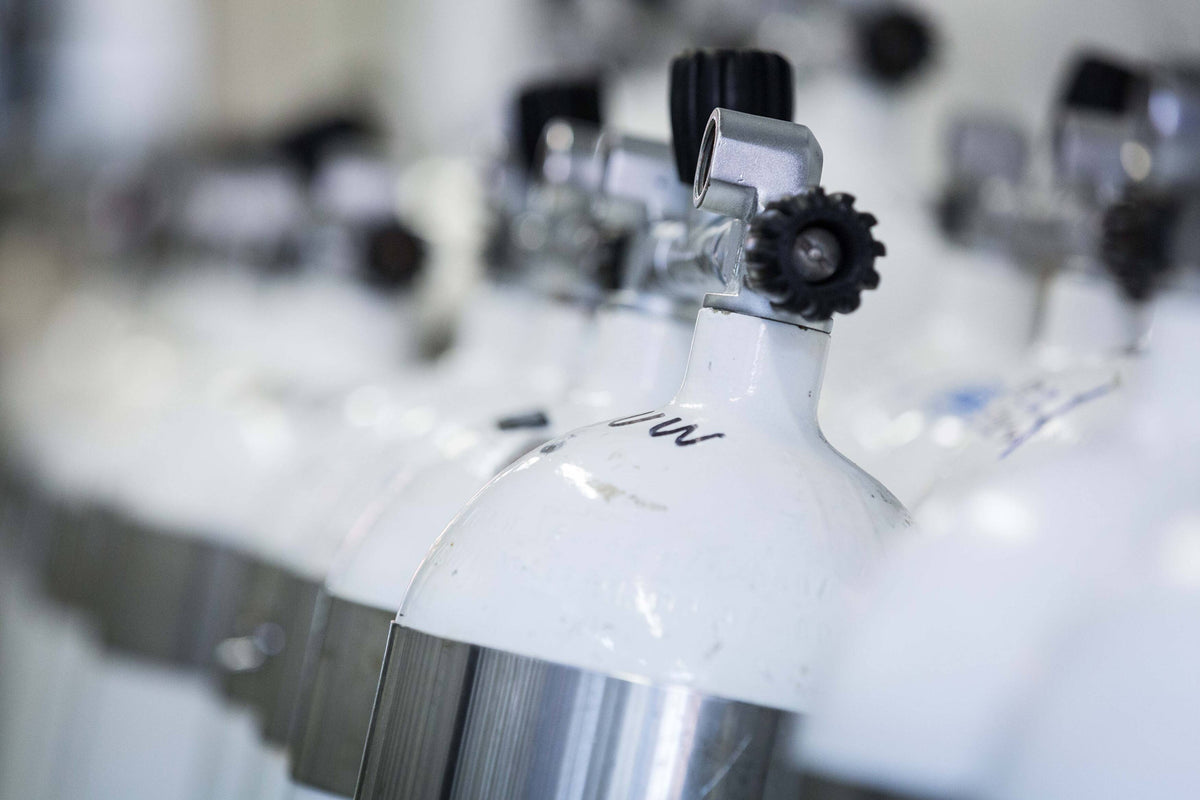
If you own a scuba cylinder in Australia, it needs a visual inspection and a hydrostatic test every 12 months. Once it's out of test, no fill station should fill it, so a lapsed date can quietly end a dive weekend before it starts. At Dive Centre Bondi a test costs $80 for a standard single, includes an air fill once it passes, and costs nothing if it fails. Walk in with your cylinder and you'll usually have it back within one to two weeks. You can see the full rate card on our servicing page.
This post covers what the test involves, how to read your test date, what it costs, and the one type of aluminium cylinder you need to know about.
How Often Does a Scuba Cylinder Need Testing in Australia?
Every 12 months. Australian Standards require scuba cylinders to be visually inspected and hydrostatically tested once a year, by an approved test station. Australia's interval is much shorter than in some other countries, so if you've bought or dived with cylinders overseas, don't assume their schedule applies here.
The rule applies to every scuba cylinder, steel or aluminium, single or twin-set, whether you dive it every weekend or it's been sitting in the garage since last summer. Age and use don't change the interval.
What Happens If Your Cylinder Is Out of Test?
A fill station shouldn't fill it. Fill stations are expected to check for a current test mark before they connect a cylinder, and an out-of-test cylinder gets turned away. In practice that means:
- you can't get air or nitrox until the cylinder has been tested
- you can't use it on a trip that asks you to bring your own tanks
- if it's been more than a few months, budget for any extra work the inspection turns up, such as cleaning out corrosion
The easiest fix is to check the date now. If it runs out before your next trip, get the cylinder tested well before you need it, not the week you need it.
What the Test Involves
There are two parts: a visual inspection and the hydrostatic test itself.
The visual inspection
The valve comes off and the cylinder is checked inside and out. Outside, the inspector looks for dents, gouges and corrosion, which is why the boot and any mesh are removed. Inside, they look at the walls and the neck thread for corrosion, pitting or rust. A cylinder with internal rust may need cleaning before it can go any further.
The hydrostatic test
The cylinder is filled with water and pressurised beyond its working pressure in a test rig. The tester measures how much the cylinder stretches under that pressure and how much it shrinks back afterwards. A healthy cylinder returns to almost its original size. One that stays stretched has been weakened and fails. Water is used rather than air because water barely compresses, so if a cylinder does fail, it doesn't release stored energy the way a full air cylinder would.
Once it passes, the cylinder is dried, the valve goes back on, and it gets a new test mark showing the month and year.
How to Read Your Test Date
Look around the cylinder's neck. You'll find the test station's mark next to a month and year. The most recent date is the one that counts, and your cylinder is due 12 months after it.
If you can't find a date at all, or you can't read it, treat the cylinder as out of test and bring it in.
Aluminium 6351 Cylinders: Check Yours
Some older aluminium cylinders were made from an alloy called 6351-T6, which can develop slow-growing cracks in the neck and shoulder over time. SafeWork NSW has issued a safety alert about them, because a cracked cylinder can fail under pressure. The alert lists, among others, Luxfer cylinders made before 1989, Walter Kidde before 1990 and CIG Australia before 1991.
These cylinders need an eddy current test, a scan that looks for cracks in the neck, on top of the usual inspection and hydro test. We do test older cylinders, and the visual eddy current test adds $30. If you have an older aluminium cylinder and you're not sure what it's made from, bring it in and we'll check the markings with you.
Cylinders Over 20 Years Old
Once a cylinder is more than 20 years old, we won't send it for another hydro test, and almost no fill station will fill it. Check the manufacture date on the neck, which is usually the oldest date stamped there. If your cylinder is getting close to 20, plan to replace it rather than test it again. You'll find the steel and aluminium cylinders we stock in the shop.
What Cylinder Testing Costs at Dive Centre Bondi
| Service | Price |
|---|---|
| Hydrostatic test, standard cylinder | $80 |
| Hydrostatic test, cylinder over 13 litres | $90 |
| Hydrostatic test, twin-set | $180 |
| Visual eddy current test | $30 |
| Valve service and O-rings | $35 |
| Oxygen clean | $50 |
| Extra scrubbing or brushing | $50 |
These are labour prices per item. The hydro test price includes an air fill once your cylinder passes, and if it fails, there's no charge for the test. We'll tell you before we start if your cylinder needs anything beyond the test.
How it works
- Walk in with your cylinder during opening hours. No booking needed. We're open Tuesday to Friday 9am to 5pm and weekends 8am to 5pm, and closed on Mondays.
- We send cylinders to our testing partner every Tuesday.
- They come back the following Tuesday, or the Tuesday after when it's busy, tested and filled and ready to dive.
If you have a trip coming up, drop your cylinder off at least two weeks before you need it.
Two of the extras are worth knowing about:
- Oxygen clean: if you fill your cylinder with nitrox, ask about an oxygen clean. It's the extra preparation a cylinder needs for gas with more oxygen in it. If you haven't done your Enriched Air Diver course yet, that's the place to start.
- Twin-sets: we test twin-sets as a pair, and we can also convert two single cylinders into a twin-set for technical diving.
Should You Own a Cylinder at All?
Only if you dive often. A cylinder costs a few hundred dollars to buy, plus a test every year whether you use it or not. If you dive a few times a year, hiring is usually the better deal, and the cylinder you hire is always in test.
If you dive most weekends, fill your own cylinders, or bring your own gear on trips, owning makes sense. On our Bushrangers Bay shark dive, for example, the price drops from $345 to $245 if you bring your own full set of gear, tanks and weights included, as long as your cylinders are in test. You'll find the steel and aluminium cylinders we stock in the shop.
Still learning? You don't need a cylinder of your own for the PADI Open Water course. Tanks are included, and our post on what gear you need for the course explains what's worth buying first.
FAQ: Scuba Cylinder Testing
How often do scuba cylinders need to be tested in Australia? Every 12 months. Australian Standards require a visual inspection and a hydrostatic test once a year, and fill stations won't fill a cylinder that's out of test.
How much does a scuba tank hydro test cost in Sydney? At Dive Centre Bondi a hydrostatic test costs $80 for a standard cylinder, $90 for a cylinder over 13 litres and $180 for a twin-set. The price includes an air fill once it passes, there's no charge if it fails, and any extra work is quoted before we start.
How long does cylinder testing take? One to two weeks. Dive Centre Bondi sends cylinders to its testing partner every Tuesday, and they come back the following Tuesday, or the Tuesday after when it's busy, filled and ready to dive.
Can I get my tank filled if it's out of test? No. A fill station should check for a current test mark before filling, and an out-of-test cylinder will be refused until it has been inspected and tested.
Where do I find my cylinder's test date? Around the neck of the cylinder, next to the test station's mark. The cylinder is due 12 months after the most recent date.
Can you test a scuba cylinder that's more than 20 years old? No. Dive Centre Bondi doesn't send cylinders over 20 years old for another hydrostatic test, and almost no fill station will fill one. Check the manufacture date on the neck and plan to replace a cylinder before it reaches 20.
What is a 6351 aluminium cylinder? An older aluminium cylinder made from 6351-T6 alloy, which can develop cracks in the neck and shoulder. SafeWork NSW has issued a safety alert about them. They need an eddy current test as well as the usual inspection and hydro test.
Got a cylinder that's due, or not sure when it was last tested? Walk it into the shop at 198 Bondi Road, no booking needed, or see our servicing prices and turnaround before you drop it off.